For one of my brands, we went through seven, maybe ten or more, rounds of packaging concepts before we could even start on the details. Each round was a different concept, a full attempt at what the brand should look like sitting on a shelf, and each one went back because it wasn't there yet. The whole run took about three months.
I don't think that number was unusual, and I don't think it was wasted. A visual identity is where branding gets real, and it gets real in print, on packaging and collateral of any kind, because print is the one place a brand can't take anything back. A website gets edited on a Tuesday afternoon. Ten thousand printed boxes do not. So the time it takes to get it right is the biggest cost of the whole exercise, and it's the biggest cost because it has to be good.
| Website | Print run | |
|---|---|---|
| Taking it back | Edited on a Tuesday afternoon. | Ten thousand printed boxes, and no do-over. |
I love Chef's Table on Netflix, and there's a saying in the cooking world about why the plating matters as much as the food: people eat with their eyes first. I think that's true for brands too. The packaging, the first ad someone scrolls past, the thumbnail in a feed. Visual is the first sense a person experiences a brand through, and they've made a judgment before they've read a word. Getting that right, and then keeping it consistent everywhere the brand shows up, is the job.
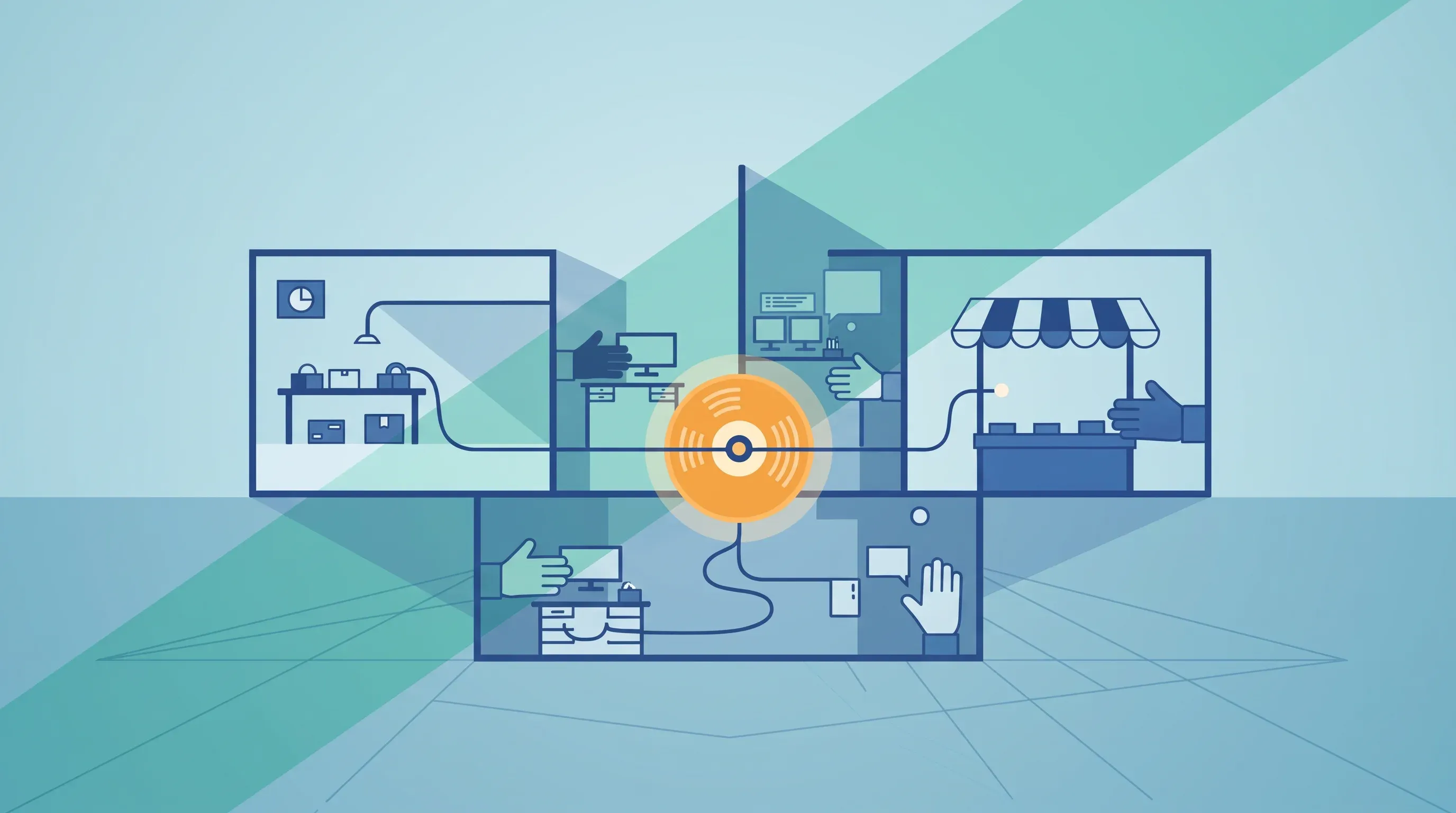
Consistent is the half people underestimate. A brand shows up in more places than one person can watch, on the pack, in the ad, in a creator's kitchen, in a marketplace listing somebody else built, and it gets made by more hands than one person can brief. I've written the guides. Style guides, lighting guides, folders of examples of what we wanted. They help people get up to speed faster, and you cannot force anybody to use them, and you can't control what somebody does unless you're in the room with them. So the packaging that took ten rounds gets photographed under the wrong light by someone who never opened the folder, and the judgment a customer makes with their eyes gets made on that photo.
A brand shows up in more places than one person can watch, on the pack, in the ad, in a creator's kitchen, in a marketplace listing somebody else built, and it gets made by more hands than one person can brief.
Most of what I know about this I learned by paying for it.
What creative costs
Creative is one of the most important, most expensive, and most time-intensive things to get right for a brand. It takes taste, trust, iterations, and patience. Trust in particular takes rounds. Nobody hands a brand to a creative they've known for a week, and a creative can't do their best work for a client they don't yet understand, so the first rounds with anyone new are partly the brand being learned. A round of ad creative, planned and shot and edited, has run me weeks and thousands or tens of thousands of dollars at every brand I've operated, and those numbers don't come from a bad relationship. They're the shape of the work when the work is done properly.
The squeeze is worse when the brand is small. You don't have an in-house team. Nobody's title says creative director, so it's the founder's job, between the other ones. Your planning is less structured than the agency assumes, because you're figuring the brand out as you go, and when you're launching fast or testing a new angle, speed is a competitive advantage nobody will sell you. The turnaround the creative world runs on was built for brands with a calendar. A small brand has a hunch and a window.
Then there's what happens when the work comes back wrong. Off-brand, or on-brand and flat, after you've waited weeks and spent hundreds or thousands of dollars on it. The menu at that point is bad in every direction. Back to the drawing board. Re-cut what you have. Switch creators. Run it anyway. Eat the cost. I want to be careful here, because none of that is the creator's fault. The people I worked with wanted it to land as much as I did, and a piece that doesn't work is bad for them too: a relationship that should have been the start of something becomes a conversation about the invoice. Part of the gap is structural, the tension between what a brand wants a creator to say and what that creator would authentically say, and that tension deserves its own piece. Part of it is simpler: a brief can't carry enough of what a creative still has to learn about the brand.
The off-season
Better Weather, one of the brands I operate, is a seasonal brand, and a seasonal brand teaches you a version of this problem on the calendar's schedule, whether or not you're ready for the lesson.
For part of the year the brand is everything. For the rest of it the brand is quiet, and the creative relationships you built for the season don't know what to do with the quiet. Planning the right content in the off-season was a real problem: what do you make, and for whom, when the moment the product exists for is months away? The money didn't fit the calendar either. Those relationships ran on retainers and commitments, and they were worth far more in some months than in others. So you pause them for the off-season, and pausing turns out to be the easy half. Restarting a creative relationship is the cost. The first rounds back are the brand being learned again, the way they were the first time, and that restart, not the quiet, was what the off-season charged us.
I don't have a tidy answer for what a seasonal brand should do with a creative budget. I know the shape of the problem, which is production priced as a constant, for a brand whose need is a wave.
The one that worked
Something else happens often enough that it earned its own section. Something works and you don't understand why. It was a random test, a variation you ran without the alternative variables that would let you isolate what did it. And once it works, the only thing you want is to double down, fast, before whatever made it work stops working.
That's exactly when the old shape of creative fails you. Doubling down means more rounds, more rounds mean weeks and money, and by the time the next set arrives the moment may have moved on. Speed matters here for a reason that has nothing to do with productivity. Volume teaches. Five variations this week teach you more about why the one worked than one careful variation next month, and a brand that can only afford the careful one never finds out.
Five variations this week teach you more about why the one worked than one careful variation next month, and a brand that can only afford the careful one never finds out.
This is one of the places I think AI changes the math outright. Put five more variations of the one that worked in front of you tomorrow, for the cost of a review pass, and you find out what did it while it's still doing it. I couldn't buy that at any of my brands, where the double-down was always a second production.
The creative who just got it
Against all of that, here is the part I'm sure of. We've all had people we've worked with creatively who just got it. They had the right taste bar. They understood the balance between creative and commercial without being told where the line was, and they could look at a concept and know it was off before anyone in the room could say why. A good designer who gets it is gold. I've had a few, and every one of them was worth far more than the invoice.
What they had was never in the brief, and I've come to think it can't be. A brief carries the palette and the claim and the format. The bar, that internal sense of what this brand would and wouldn't do, gets built somewhere else, by a person looking at a hundred attempts and hearing a founder say no to ninety of them. The ten rounds of packaging were that bar being built in someone's head, one no at a time, and when that person moved on to their next client, the bar went with them.
| The bar in a person | The bar owned by the brand | |
|---|---|---|
| Where the taste bar lives | Built in someone's head, one no at a time, by looking at a hundred attempts. It went with them to their next client. | Held by the brand and moved by your feedback, so every frame you send back moves the bar a little and it stays moved. |
The ten rounds of packaging were that bar being built in someone's head, one no at a time, and when that person moved on to their next client, the bar went with them.
That's the thing I've worked to build into Jinn. The designer who gets it is as valuable as ever; the bar itself becomes something the brand owns. Jinn doesn't arrive knowing your brand any more than a new designer does. It becomes the bar the way they did, by holding it and learning from your feedback, so every time you send a frame back, the bar moves a little and stays moved, for every hand that touches the brand after that.
Vermeer, the studio we built on top of it, is best understood as a prototyping tool for creative teams. It lets a team articulate a vision efficiently, test it, and iterate at the speed of the hunch, and it lets a smaller team test in ways that would otherwise take significantly more budget and patience than it has. The agencies and creatives I still work with are the ones who'd use a tool like that to reach the good idea faster.
A brand gets judged before it's read, on a shelf, in a feed, in print, and the judgment has to come out the same in all three places. I spent years buying that consistency one round at a time. I'd rather own the bar.
Why does creative take so many rounds?
Trust takes rounds. Nobody hands a brand to a creative they have known for a week, and a creative cannot do their best work for a client they do not yet understand, so the first rounds with anyone new are partly the brand being learned.
What does a round of ad creative cost?
Planned, shot and edited, a round has run me weeks and thousands or tens of thousands of dollars at every brand I have operated. Those numbers do not come from a bad relationship. They are the shape of the work when the work is done properly.
What happens when the work comes back off-brand?
The menu is bad in every direction: back to the drawing board, re-cut what you have, switch creators, run it anyway, or eat the cost. None of it is the creator's fault, and a relationship that should have been the start of something becomes a conversation about the invoice.