The creator had millions of views. Hundreds of thousands of followers, an audience that looked like ours on paper, a feed where products like ours seemed to sell. We briefed it well. The content came out beautifully, and I mean that; I would have run it as an ad. We posted it, and we were excited, and we waited. Maybe a sale. Maybe two.
I've had that afternoon more than once, across more than one brand. Nobody did anything wrong. The creator did the work, the product was good, the audience was right. Social platforms run on algorithms nobody controls and that don't behave the same way two weeks running, so sometimes a piece everyone believed in goes nowhere, despite everyone's best intent. I don't hold it against the creators. I'd work with most of them again.
What it did to me as a small brand is the part I still think about. Does this have an ROI? If organic social and creator content isn't how I stand out, what is? How do I reach my people at all? Really tough questions, and for a long time my honest answer to all three was that I didn't know.
The expensive part isn't the money
Video is always expensive and always has a long lead time, and the money is the smaller half of it. First you find the people: creators, or an agency, or a photographer and a videographer and talent. Then everyone aligns on a script and a vision, which takes as many rounds as it takes. Then the shoot, then the edit, then the post. Weeks, at minimum, before you learn anything, and what you learn is one data point, from one platform, in one week of an algorithm that will behave differently the next, and you're expected to decide what to make next from that.
Creators, or an agency, or a photographer and a videographer and talent. Every run begins by assembling the people who will make it.
Everyone agrees on what the piece will say and how it will look, which takes as many rounds as it takes.
The piece gets made. Everything before this was preparation, and everything after it is working with whatever came back.
The footage becomes the piece. This is the last point at which the thing is still being shaped rather than judged.
It goes out. Weeks have passed, at minimum, before the brand learns anything at all from it.
When it comes back wrong, and wrong here means off-brand or simply not working, the menu is bad in every direction. Re-cut it. Send it back to the drawing board. Switch creators. Run it anyway. Eat the cost. Every option costs the brand, and several of them land on the creator, who did the work in good faith and now has a client who won't use it. I've sat on the buying side of that conversation and I didn't enjoy any version of it.
Guides help, a little. I've written messaging documentation, voice notes, lighting notes, examples of the video types we wanted, and they got people up to speed faster. A creator who has seen the shape of the video you want shoots closer to it on the first try, and that benefit is real. You can't make somebody use them, though, and you can't control what a creator does unless you're in the room, which on a social-led team you never are; the creators are in different cities and each one is a small studio of their own. What a brand wants said and what a creator would say on their own are two different things, and the strategy is the tension sitting between them. That tension gets its own piece, from the writing side, and I won't rerun it here.
Thirty million, by hand
Bloombelly's launch is the best run I've been part of, and it was made by a system, not by any single video. My partner and I built that system strategy first: messaging documentation, and examples of the kinds of video we wanted, so a creator could see the shape before shooting one. Then we brought on a team of experienced creators and managed them daily. The point of the daily management was volume: keep enough coming out that we looked bigger than we were, and saturate the algorithm to some degree inside that window. For our size the volume was very high, and it was very labor-intensive. Two people, every day, reviewing, redirecting, keeping the machine fed by hand.
Ninety days of that produced 30M+ organic TikTok impressions with zero ad spend, for a brand that was largely unknown and had honestly just launched. I'm very proud of that number. Most of it didn't work, and the number hides that. Thirty million impressions was consolidated, the way results always are, into a minority of the videos, and there were a lot of pieces that honestly didn't move the needle at all. The system was built for exactly that, because nobody knows what an algorithm will pick up in a given week. Swings at bat are part of the strategy, and the pieces that hit came out of all the ones that didn't. What that number can and can't teach is a separate autopsy, and I've written it.
The production reality is what belongs here. The run worked because two people held the brand's judgment in their heads and applied it to every piece, every day, and the run ended because two people can't do that forever.
Scale is where you lose the narrative
Any time there's scale, you run the risk of losing control of the brand's story. Volume means more hands. More hands means more interpretations, and a few of those interpretations will be somebody else's idea of your product. In one run a creator took the product in a direction we really weren't comfortable with. We caught it fast, and we pulled it down. I'm not going to describe the video, because the specifics aren't the lesson. The lesson is that we caught it because someone was reviewing everything that went out, and the moment nobody is, the piece you missed is the one that runs.
The run worked because two people held the brand's judgment in their heads and applied it to every piece, every day, and the run ended because two people can't do that forever.
Reviewing everything is the control, and reviewing everything is exactly what volume takes away from you. At the pace of the Bloombelly run, two people could still review every piece before it went out, barely. Add creators and they can't, and the choice becomes the one every small brand on social eventually faces: slow down and lose the algorithm, or keep the volume and accept that some of what runs will be somebody else's version of you.
For Bloombelly that risk had a sharper edge, because the product is a prenatal supplement, and there is a real line between what's honest, what's realistic, and what sells. That line has a piece of its own. Here it's enough to say that a creator working from feel can cross it without meaning to, and the customer on the other side of that line is an expectant mother.
The lesson is that we caught it because someone was reviewing everything that went out, and the moment nobody is, the piece you missed is the one that runs.
The dogs on the box
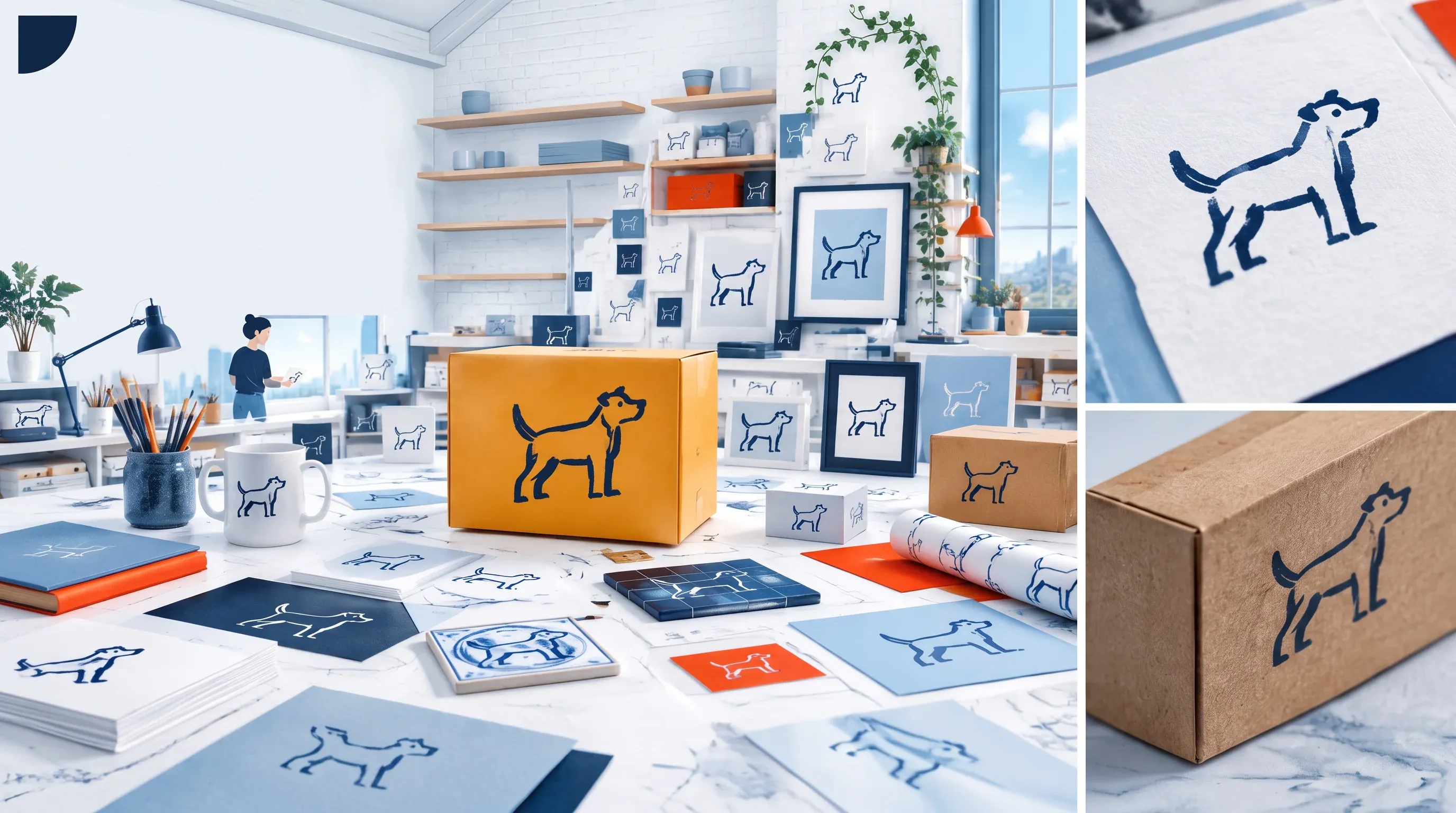
Characters have always been fun to me. I've toyed with them in a number of products and never really brought one to life. The closest I came was at Dandy, where I came up with the idea of putting hand-drawn characters of each of the team's dogs on the boxes. An Easter egg. Nobody asked for it, and it made the product feel like part of the family, because dogs already are. My own dog, Theo, was one of them, and seeing him on our boxes brought me so much joy. The launch that made it land was Target: suddenly Theo was going into the homes of thousands of people who love their dogs the way I love him.
I think about those drawings now because a character is the inverse of the creator problem. The dogs on the box could never take the product somewhere we didn't send them. They were ours, drawn once, the same on every box, and they carried a feeling about the brand that no brief could have handed to a stranger. The thing that's changed is that a character can be brought to life, on camera, and stay itself across every scene, and an AI character that makes a product relatable to the person buying it is one of the things I'm most excited about in this whole field.
Video was where the brain came from
Jinn started with video. It's the hardest thing we make, and because it's the hardest, it forced a very detailed, very complicated brain: every claim, every color, every voice rule, written down well enough that a machine could check a script against it before a person had to. Then the brain turned out to be portable to everything else a brand makes. I've told that story in *The Context No Hire Can Carry*, and this piece is about why video needed the brain in the first place.
What I wanted the whole time
Put the two runs side by side. The 30M+ run had the volume and the reach, and it cost two people every day, and it still leaked a video we had to pull. The dogs on the box had the control and the warmth, and they were one drawing on one package. What I wanted, on every brand I've run, was both at once: the daily volume of a creator team, with the judgment of the two people reviewing every piece built into the process itself, so that the review happens whether or not I'm in the room.
What I stopped accepting is that maybe-a-sale was the only shape a small brand's video could take.
| The 30M+ run | The dogs on the box | |
|---|---|---|
| Reach | Thirty million-plus organic impressions in under 90 days, with zero ad spend. | One drawing, on every box that shipped. |
| Control | It still leaked a video we had to pull down. | The dogs could never take the product somewhere we didn't send them. |
| What it cost to hold | Two people, every day, reviewing every piece before it went out. | Drawn once, and then it was done. |
Faking that is cheap, and plenty of people will. I'd rather make fewer pieces that someone has actually reviewed.
I still work with creators, and the good ones are still worth what they cost, and the afternoon with the beautiful content and the two sales is still going to happen to somebody, because the algorithm is nobody's. What I stopped accepting is that maybe-a-sale was the only shape a small brand's video could take. It was the only shape as long as the judgment lived in two heads. It isn't anymore.
Why did a creator with millions of views produce almost no sales?
Nobody did anything wrong. The creator did the work, the product was good, the audience was right. Social platforms run on algorithms nobody controls and that do not behave the same way two weeks running, so sometimes a piece everyone believed in goes nowhere.
What did the 30M+ run actually take?
Strategy first: messaging documentation, and examples of the kinds of video wanted, so a creator could see the shape before shooting one. Then a team of experienced creators, managed daily by two people, reviewing and redirecting, to keep enough coming out that the brand looked bigger than it was.
What breaks first when a video program scales?
Review. At the pace of that run, two people could still review every piece before it went out, barely. Add creators and they cannot, and the choice becomes slowing down and losing the algorithm, or keeping the volume and accepting that some of what runs will be somebody else's version of you.
Silver, Jinn's video product, is in private beta.