I have not written publicly as much as I probably should have. I'll make that admission before the rest of this, because the rest of this is about voice, and my own is the one I've spent the least time on.
The reason is pretty common. I was building brands. Every hour I had for words went to their words: the launch email, the landing page, the listing, the caption a creator would read aloud on camera. I thought about how the launch email and the listing should sound constantly. I thought about how I should sound almost never. Unless you naturally love writing, it takes a ton of time to do well, and my time went to the brands I was running.
So this is a piece about where a brand's voice actually lives, written by someone who found his own voice last.
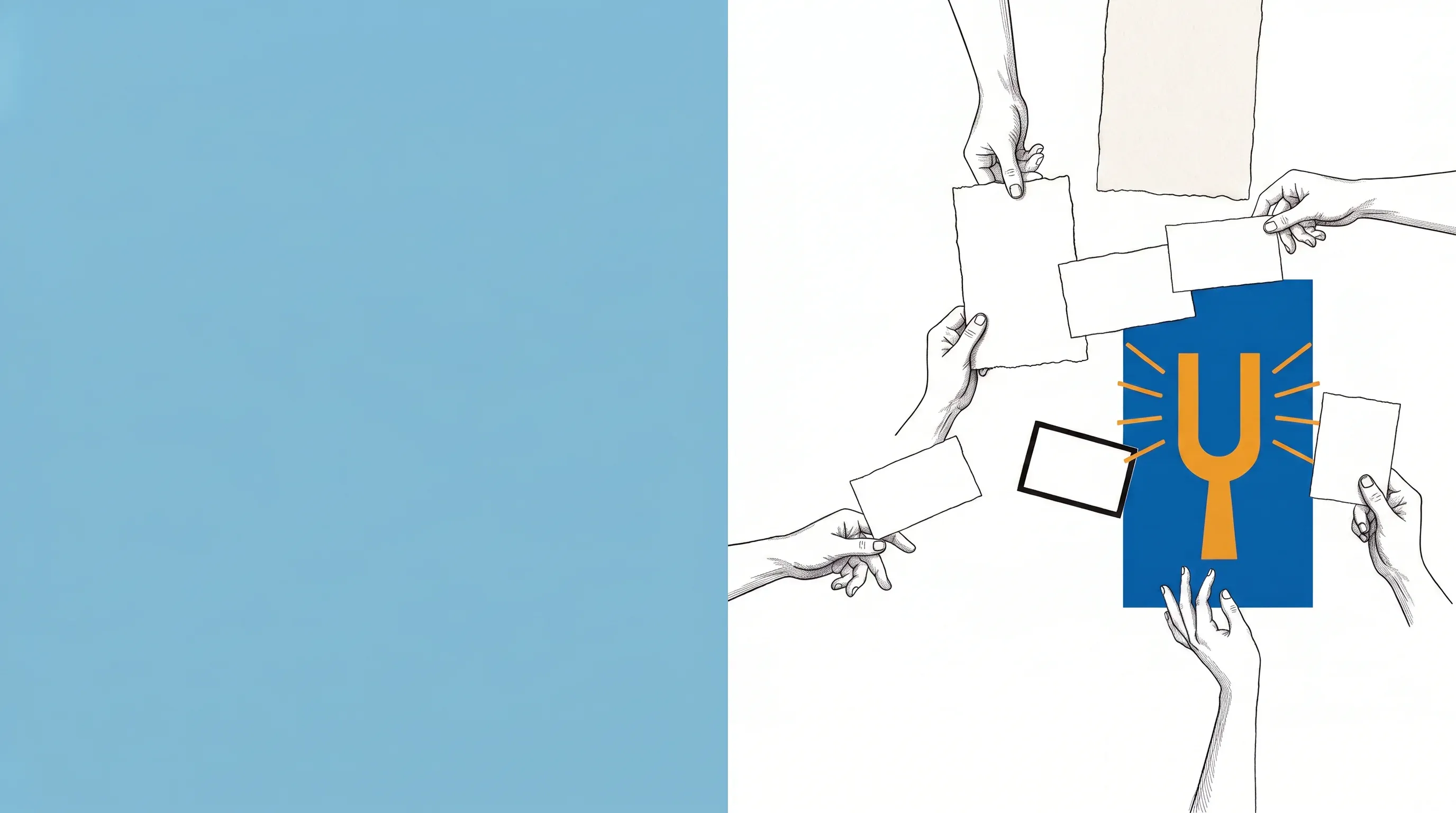
Many hands, one taste
Across the brands I've run, no single person wrote the copy. On a small team that's close to a law. The email copy, the landing pages, the website, the Amazon listing: each is a specialized piece of writing, each needs its own strategy, and each tends to get written by a different person. A freelancer for one, an agency for another, a consultant for a third. Me, at midnight, for whatever was due tomorrow.
Its own specialty, its own strategy, and usually its own writer. It came back to me to read, and I said yes or I said no.
A different specialty again, and more often than not a different hand. Checked the same way, against whatever my reaction was that day.
Another writer again. There was no document to hold the draft up to, so it got held up to me.
Its own kind of writing, with its own strategy. It arrived from somewhere else and got read by the same one person.
Which means the voice never lived in a document. It lived in my taste. A draft came in, I read it, something in me said yes or said no, and the writer adjusted to the no. That was the system at every brand I ran. The voice was a series of reactions from one person, applied to a series of other people's drafts, and it worked exactly as well as I had time to react.
The voice was a series of reactions from one person, applied to a series of other people's drafts, and it worked exactly as well as I had time to react.
Most of the time there were no voice guidelines at all, and certainly no planned variations by channel, no examples of what the brand sounds like in an email versus a listing versus a thirty-second video. Early on there's never time for that. You rely on your own feedback, the freelancers and agencies and consultants rely on it too, and it takes a ton of time on both sides.
What I'd have paid for and couldn't buy was a profile you can check a draft against. A record of the voice, accurate enough that a person who has never met me could hold a draft up to it and see where it drifts.
What I'd have paid for and couldn't buy was a profile you can check a draft against.
The guides nobody could be made to open
I did write guides. Style guides, voice guides, lighting guides for video, folders of examples. It's all stuff we do, and it helps. A new writer gets up to speed faster with a guide than without one.
But you can't force somebody to use it. You definitely can't control what they do unless you're in the room with them, and in a social-led business, with creators spread out, each making short video on their own phone, you are never in the room. A guide takes real time to write well, and the risk is that it goes into a shared drive and stays there, unopened, while the work gets made from memory.
| Written | Enforced | |
|---|---|---|
| The guides | Style guides, voice guides, lighting guides for video, folders of examples. A new writer gets up to speed faster with a guide than without one. | By nobody, unless you happen to be in the room. In a social-led business with creators spread out, you are never in the room. |
There's a separate piece on the version of this problem where the writer isn't a person at all and the brand book is a PDF a machine can't read. The human version came first, and it has the same shape. Guidelines describe the voice, and nothing enforces them, so the voice gets enforced by whoever is awake when the draft comes in.
The tension in the middle
The hardest writing I ever managed wasn't mine or a freelancer's. It was a creator's.
On a brand video a lot of people contribute to the message: the brand owner, the strategist, the freelancer who wrote the brief, the creator holding the phone. And there is always a tension between what a brand wants the creator to say and what the creator would authentically say. Write a script and hand it over, and you get a video that sounds like an ad. Let the creator run, and you get a video that sounds like them and might never mention why anyone should buy. The strategy is the tension that sits in the middle of it. The job is to hold the middle on purpose.
There's a second tension underneath that one. A brand's picture of itself, what it aspires to sound like, can be very different from who the customer actually is and what actually resonates with them. You'd want to test different people's points of view against real customers to find out. Budget makes that nearly impossible when every point of view costs a shoot, so the brands I ran picked a lane and hoped.
I'm telling the video version because it's the clearest, but the same tension shows up in a caption, a product description, an email to someone who already bought, a reply to a customer's comment. Whose voice is this, the brand's, the writer's, or the customer's? All three, and at the brands I ran nobody had written down the proportion, so every writer guessed at it.
What's honest, what's realistic, and selling
One of the brands I run is Bloombelly, a prenatal supplement. If you have ever written copy for something a pregnant customer is going to put in her body, you know the specific weight of it. You want to articulate the benefits, because that is what the copy is for. And given who the customer is, you must not misrepresent what the product can and can't do. Every sentence lived in the tension between what's honest, what's realistic, and selling.
At the time, that judgment was mine. One person's point of view, applied line by line, to every piece of copy anyone wrote for the brand. On Bloombelly I was the legal check and the voice check and the last look at whether the claim was still true, all of it between other jobs.
The customer can feel when that goes wrong, and it costs the brand more than the sentence. The tell isn't the technology. It's generic copy, off-brand copy, the supplement brand that sounds like every other supplement brand. When consumers notice AI-generated content in brand marketing, they're four times more likely to trust the brand less than more, 31 percent versus 7 percent (Klaviyo and Datalily consumer survey of 8,000 people, reported by eMarketer, 2026), and what they're noticing is almost never the model. It's the missing voice. That's why a generic AI writing tool doesn't cut it: it can write the sentence, but it doesn't know what the brand would never say.
The fix I wanted was to take that judgment out of one person's head and turn it into an objective judging process. Several layers, each asking a different question of the same draft: one for whether the claim is legal, one for whether it's the brand, one for the voice, and a check on whether the piece is authentic to what we actually said we'd say. A person still decides. But the person decides with the checks already run, instead of running them in their head at midnight and hoping nothing got missed.
One layer asks whether the claim is legal. It asks it of this draft and of every other draft, in the same words each time.
Another asks whether it's the brand. Not whether the sentence is any good, but whether it belongs to this brand at all.
Another asks about the voice, which used to be the question answered by whoever happened to be awake when the draft came in.
And one asks whether the piece is authentic to what we actually said we'd say, rather than merely defensible.
The judgment stays a person's. What changes is that they decide with the checks already run, instead of running them in their head at midnight and hoping nothing got missed.
That's what we built into Ghost, and I'll leave the machinery to the product's own introduction. The operator's point is that on Bloombelly a judging process I could see was the thing I needed most, and at no budget I ever had was it available.
Writing as Dan, writing as Jinn
Now the part I find hardest, which is this piece.
Writing as Dan, the founder of Jinn, and writing as Jinn, the company, are two different voices, and they're interwoven in a way that's very difficult to do well. I want to be authentic and genuine. I also know that if I say something in my own voice, it lands on the company. If I position Jinn incorrectly, or too narrowly, in a sentence that was really about me, that costs us. So every paragraph carries two questions at once: is this true and clear and mine, and what does it do to the brand I'm building?
That's a lot of variables to keep in your head. True, authentic, clear, easy to understand, resonant with the person reading, and safe for the company, all at once, in every sentence. It's the same problem as the prenatal copy at a different address. The judgment is mine, and there's more of it per sentence than one head holds unaided.
Which is where the confession at the top turns into something useful. What finally got me writing was having somewhere to put the variables. A record of how I sound, separate from a record of how Jinn sounds, each one something a draft can be checked against. A place where my raw thinking, dictated, gets turned into structure, and where the structure gets checked against the voice before I read it. It has been super helpful for me, and I say that as someone who avoided the page for years.
The real surprise is that I'm learning to love writing. It happened because I believe everybody has a story to tell, and for the first time mine is getting told. Telling stories is the oldest way people have passed on what they know, and running a consumer brand gives you more to pass on than most: perspectives that should be shared and mostly never are, because the writing takes too long and there's a brand to run. The fix I found is a voice you can check against, mine and the brand's, held somewhere other than my head. The guides can finally be enforced, because the thing enforcing them is the thing writing the draft. I want my story told. I want everyone running a brand to have a voice too, and now I can see how they get one.
The guides can finally be enforced, because the thing enforcing them is the thing writing the draft.
More of my own writing lives at danrwilloughby.substack.com.
Doesn't a style guide already solve this?
I did write guides. Style guides, voice guides, lighting guides for video, folders of examples, and they help. But you can't force somebody to use it, and you definitely can't control what they do unless you're in the room with them. In a social-led business, with creators spread out, you are never in the room.
Whose voice is a piece of brand copy, really?
The brand's, the writer's, or the customer's. All three, and at the brands I ran nobody had written down the proportion, so every writer guessed at it.
Why isn't a general-purpose AI writing tool enough?
It can write the sentence, but it doesn't know what the brand would never say. The tell a customer notices isn't the technology. It's generic copy, off-brand copy, the supplement brand that sounds like every other supplement brand.